Research via TinyFish, 2026-09-11
The headline: CED breaks the decoder-only mold
The central talking point on X is that V4.1 Flash abandons the decoder-only Transformer used by every mainstream LLM. DeepSeek calls it Causal Encoder-Decoder (CED): a 40-layer model split into a 20-layer causal encoder + 20-layer decoder (sources: official blog, alphaXiv paper, HF model card).
Alvin Wang Graylin (@AGraylin) — the most-cited take:
"The biggest thing about DeepSeek V4.1 Flash isn't the 552B count or MoE. It's that @deepseek_ai just broke the decoder-only mold… The decoder's global KV cache is projected from the encoder's final hidden states, not rebuilt at every decoder layer like every mainstream LLM you've used for years. That single design choice creates asymmetric intelligence: ~8B active params to read, ~16B to write. Prefill gets cheap. Generation keeps capacity. Exactly the shape agent workloads need — long prompts, tool traces, docs in; fewer tokens out."
He closes with: "#CED says the next leap may be structure, not just more experts and more RL."
Asymmetric MoE: 552B total, 8B/16B active
- 552B backbone MoE + 196B Engram (N-Gram embeddings) — ~510 GB total on disk
- 8B active per token on prefill, 16B on decode — the asymmetry is the cost trick
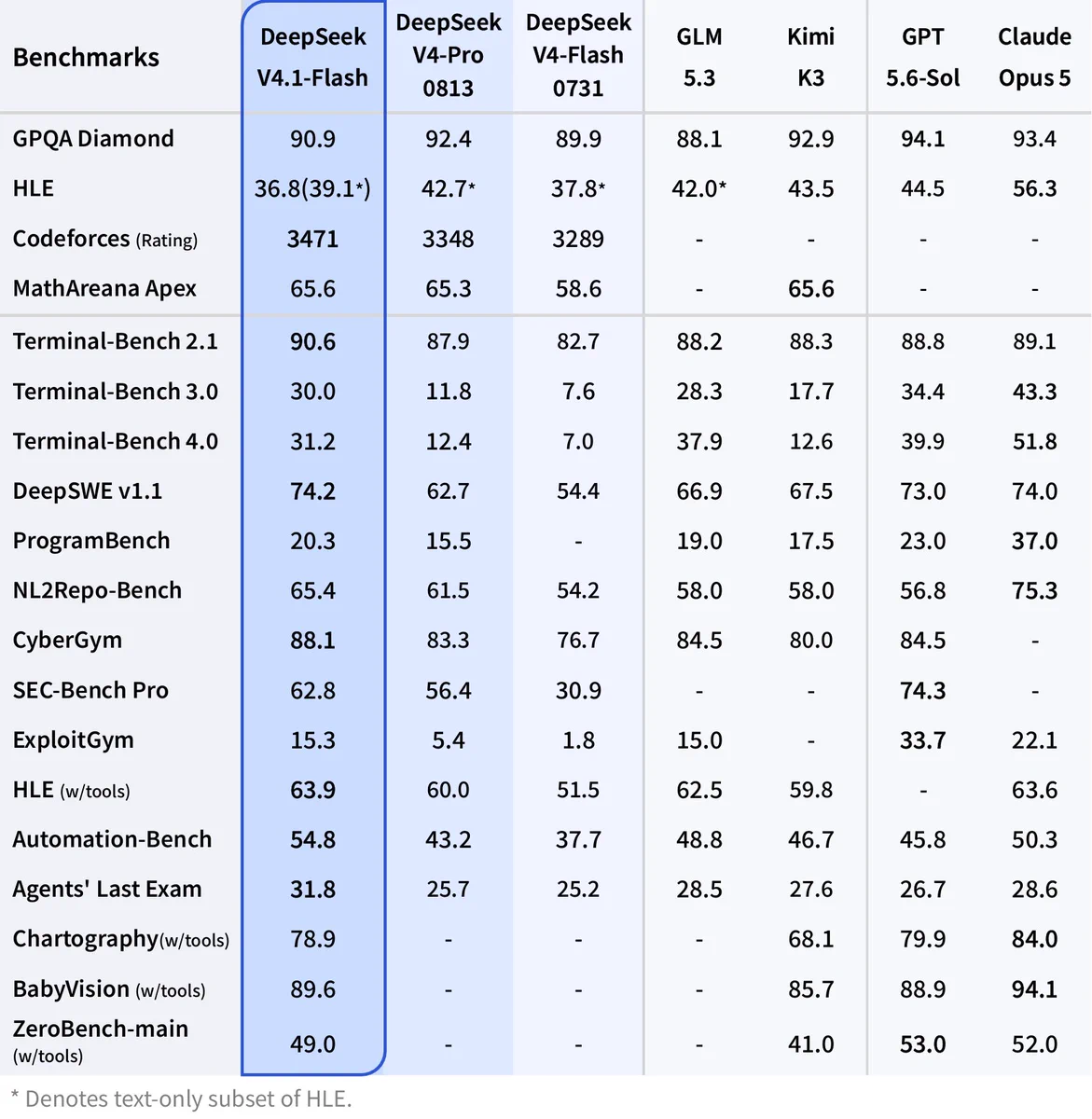
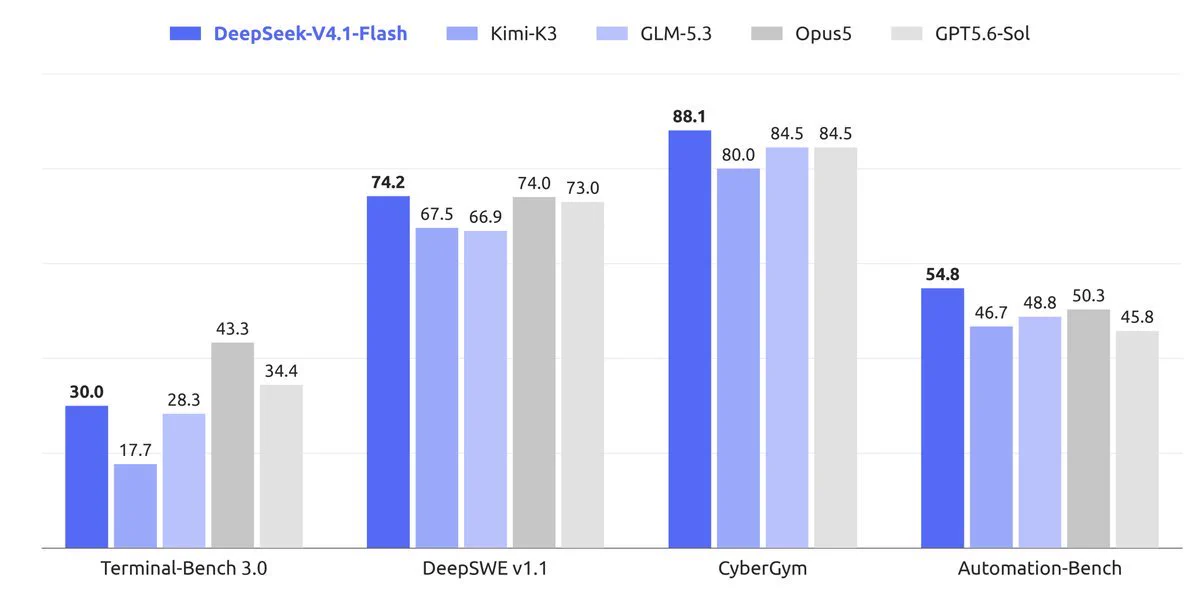
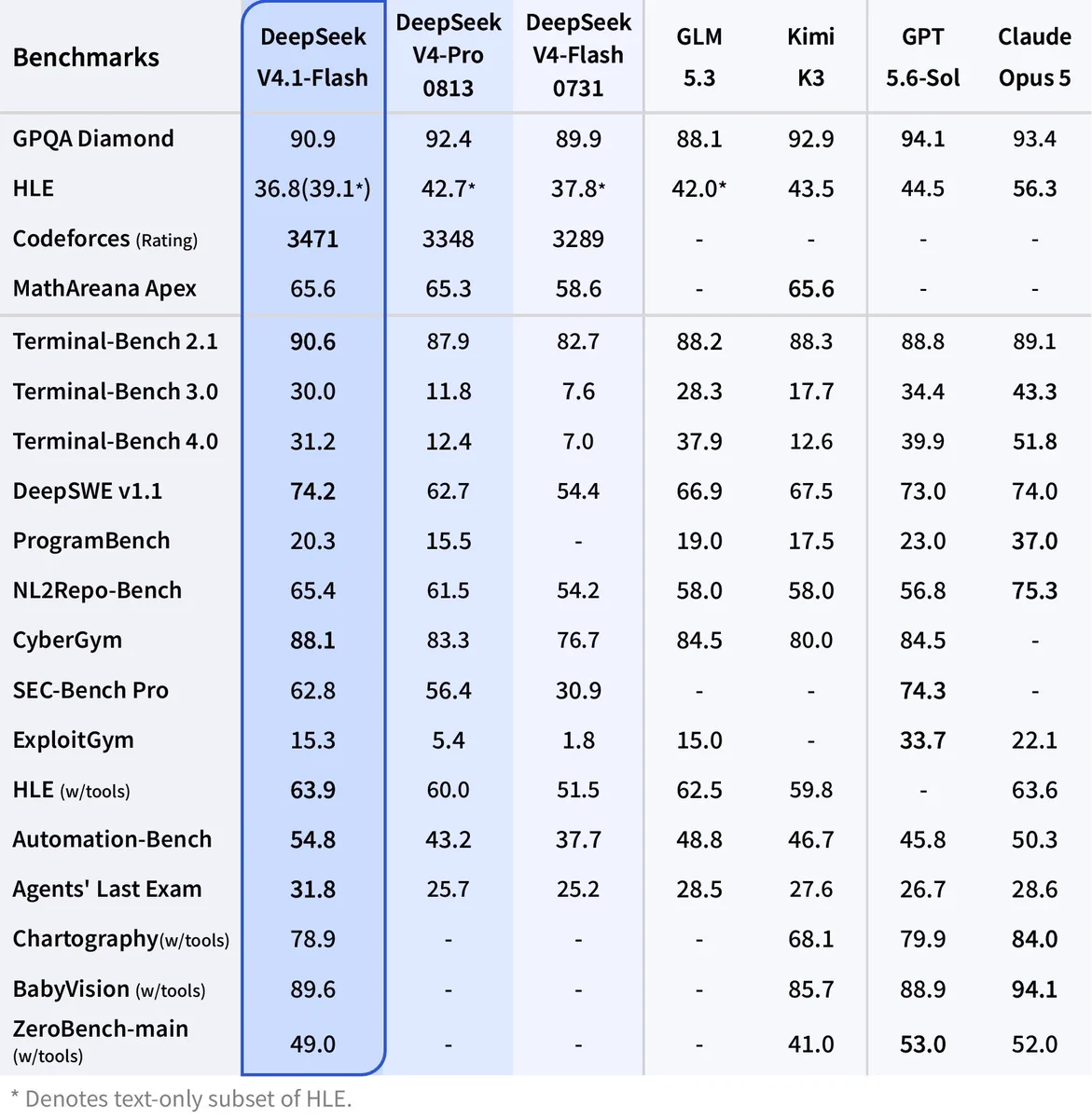
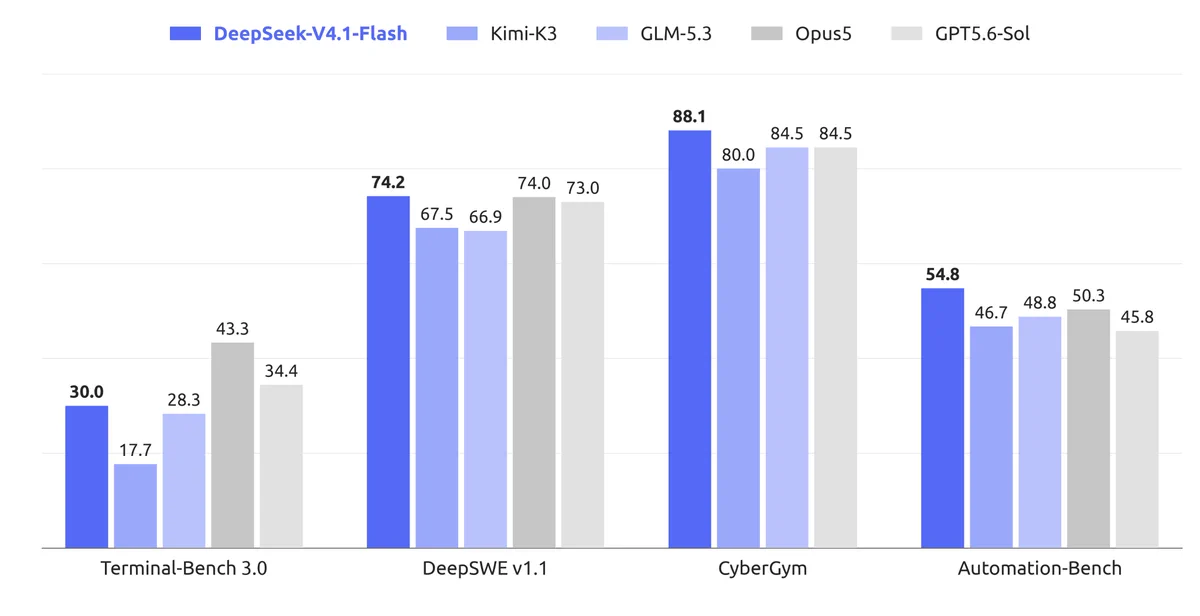
- New pretraining + larger-scale RL post-training; beats V4-Pro on benchmarks despite being smaller
Reddit: Effective_Western_59 — "196B of it are N-Gram embeddings :)"; TheFunSlayingKing — "It got bigger… makes it less exciting for me" (re: 510 GB vs prior Flash).
KV cache compression — the other big deal
This drew the strongest community reaction:
- Global KV cache: 890 B/token, always in HBM — 1/4 of V4 Flash
- Persistent KV cache (SSD/host memory): 1/8 of V4 Flash via "SWA Bounded Replay"
- Achieved through CSA2 (Compressed Sparse Attention 2, cross-layer KV reuse) + FP4 KV caching
- 1M context ≈ ~900 MB
Reddit: Top_Power5877 — "insane improvement in kvcache compression. Now 1M context is only ~900MB 🤯"; cibernox — "Will I be able to get several agents with 1M context in 192GB of vram?"
FHILY on X: "The KV cache changes might be even more important for agents… long-running agents can spend a surprising amount of money on cached context. If you can shrink the cache while keeping the model capable, the economics of running thousands or millions of agent sessions change significantly."
Speed and price reaction
- ~190 tps, TTFT ~1s — ~2.7x faster than GLM 5.3 Flash, ~1.8x faster than GPT-5.6 Luna
- Reddit
AppealSame4367: "At least on their API it's 100x cheaper, 10-20x faster. It's hard to see a reason to use codex or claude at the moment." - Chubby on X: "weekly releases with significant improvements — this is the new reality we have to adapt to" (V4.1 landed 6 weeks after July's V4-Flash)
- V4-Flash & V4-Flash-Vision-Exp retired → routed to V4.1-Flash; V4-Pro phased out from Sept 14
Images from X
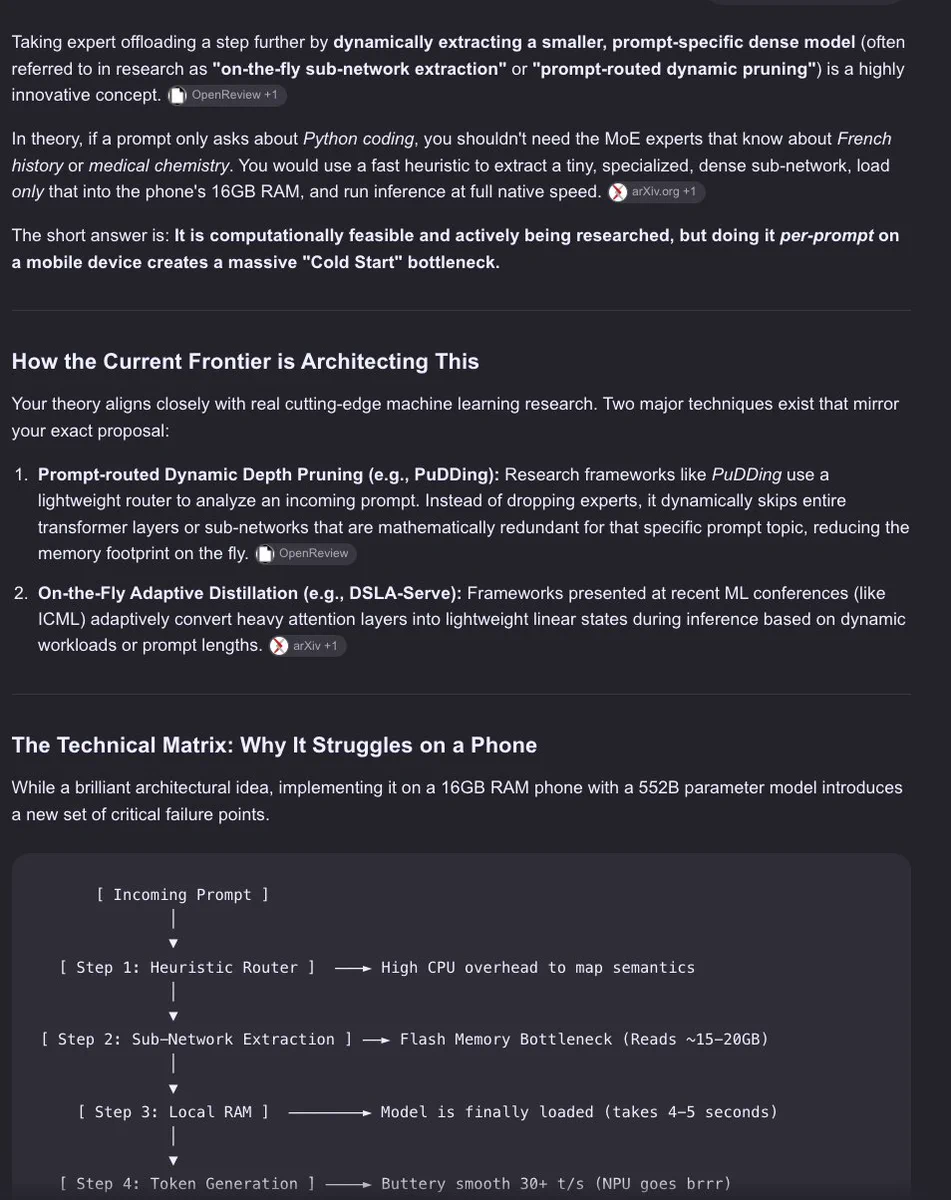
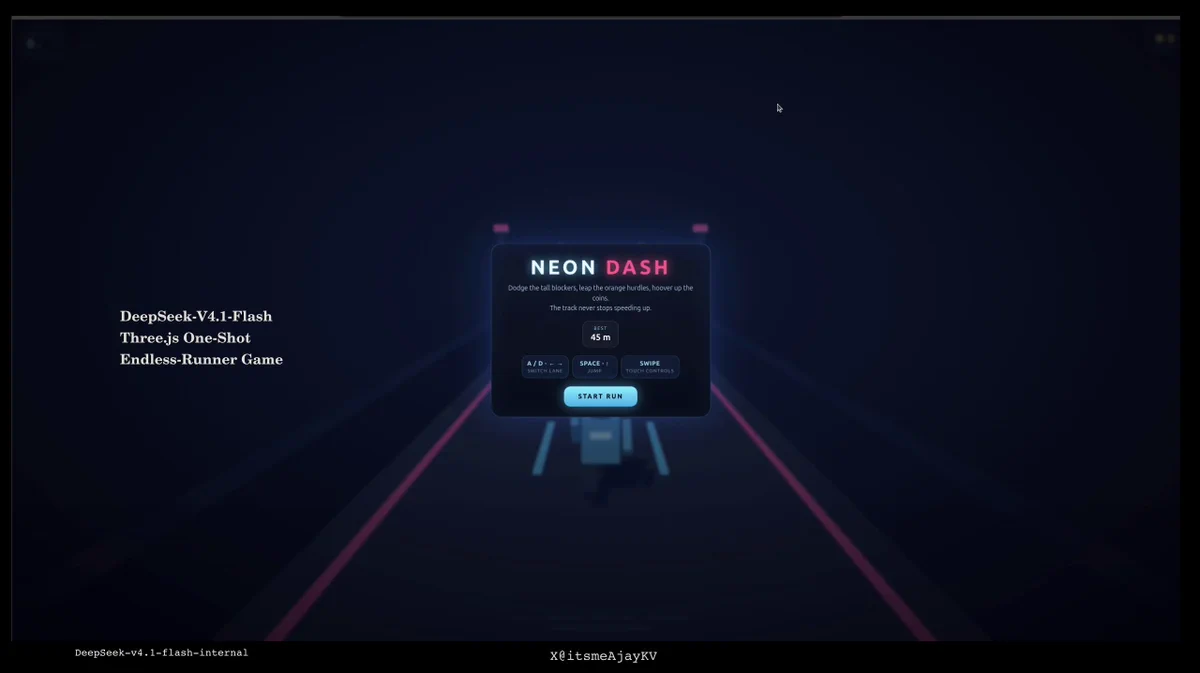
Tweet media captured at launch. Several images are official DeepSeek benchmark charts that circulated alongside these threads (sources: @AGraylin, @kimmonismus, @thePandaily, FHILY).


Bottom line from the thread
Consensus: the architecture story isn't the parameter count — it's (1) CED breaking decoder-only, (2) prefill/decode asymmetry, (3) KV cache compression that changes agent economics. The skepticism is about practicality (510 GB weights, self-host floor) rather than the design itself.
Sources
- X/Twitter: @AGraylin, @kimmonismus (Chubby), @thePandaily, FHILY
- DeepSeek official blog + alphaXiv paper + HF model card
- Reddit r/LocalLLaMA, NVIDIA Developer Forums
- OpenRouter: deepseek-v4.1-flash model page